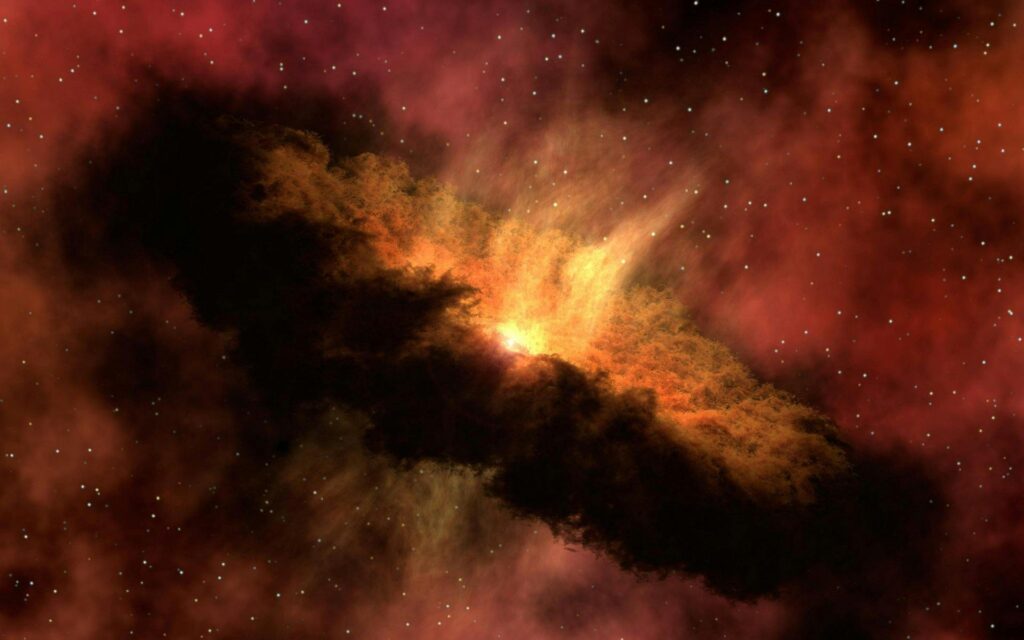
This post we look at the creation of the universe. Was it a random occurrence or was it created by GOD. The incredible complexity and fine-tuning of the cosmos suggests that such order could not have arisen by chance. It combines two classical philosophical arguments:
The Cosmological Argument (Argument from Contingency):
- Observes that everything in the universe is contingent—it relies on something else for its existence (e.g., you rely on your parents, who rely on the ecosystem, etc.) The universe itself seems contingent. This line of reasoning, famously explored by Thomas Aquinas, concludes that there must be a necessary, non-contingent being—a first reality—that doesn’t rely on anything else for its existence.
The Teleological Argument (Argument from Design):
- Focuses on the apparent purpose or design
τέλος
telos). The universe operates under precise laws (gravity, thermodynamics, etc.), and the Earth is “just right” to support life—a phenomenon called the “Fine-Tuning” of the universe. Just as finding a complex watch implies a watchmaker (William Paley’s famous analogy), observing the exquisite structure of the universe implies an Intelligent Designer or Creator.
History & The Universal Human Impulse
The near-universal human experience of seeking something more—a divine reality—is seen by many as strong evidence for a Creator.
- The Sensus Divinitatis (Sense of the Divine): Theologians like John Calvin argued that God has implanted within every human a fundamental, innate awareness of Himself. This explains why, across countless diverse and isolated communities—from ancient Egyptians to remote Amazonian tribes—you find complex spiritual beliefs, burial rites, and systems for appeasing or worshiping a higher power.
- The “God-Shaped Vacuum”: This powerful metaphor, often attributed to the mathematician and philosopher Blaise Pascal, describes the internal, existential emptiness that humans try to fill with fleeting things (wealth, pleasure, power) but which can only truly be satisfied by God. This inherent spiritual drive suggests the object of that drive—God—must exist. The sheer persistence and diversity of religion point to a common, objective source.
Cause and Effect: The Search for a First Cause
This is another cornerstone of the Cosmological Argument, focusing on the simple, observable principle that every effect must have a cause.
- The Principle of Sufficient Reason: This principle states that everything must have a reason or cause for its existence, either within itself or external to itself. If you trace the chain of cause and effect backward, you cannot have an infinite regress of causes (the universe can’t just be an endlessly receding chain of contingent events).
- The Uncaused Cause: To escape the logical paradox of infinite regress, there must be a First Cause, an Unmoved Mover (as proposed by Aristotle and adopted by Christian philosophers), or an Uncaused Cause. This initial cause must be self-existent and powerful enough to initiate the entire chain of effects we call the universe. This necessary, uncaused initiator is identified as God.
Scripture: The Special Revelation of God
While the first three points rely on general human observation and reason (often called General Revelation), the Bible introduces the concept of Special Revelation.
- The Definitive Account: The Bible, comprised of 66 books written over 1,500 years by dozens of authors, is held by billions to be the definitive, verbally inspired (or “God-breathed”) self-disclosure of God to humanity.
- Internal and External Evidence: Support for the Bible’s divine origin is often cited through:
- Prophetic Fulfillment: Hundreds of detailed predictions concerning nations, individuals, and the Messiah (Jesus Christ) have allegedly been fulfilled with incredible accuracy.
- Historical Accuracy: Archaeological discoveries continue to corroborate figures, places, and events described in the biblical narratives.
- Transformative Power: Its consistent moral teachings and ability to profoundly change the lives of readers are often cited as internal evidence of its truth.
- Direct Knowledge: Unlike philosophical observations that can only define what the First Cause must be, Scripture claims to provide direct knowledge of who God is—His character, His will, and His plan for humanity.
Conclusion: From Observation to Relationship
When we piece together these arguments—the logic of a First Cause, the intricate design of the cosmos, the universal human longing for the divine, and the specific claims of Scripture—a consistent picture emerges. We move from seeing God as a philosophical necessity to seeing Him as a personal reality.
The universe does not appear to be a silent, accidental byproduct of chaos. Instead, it functions like a vast gallery, where every physical law and every beat of the human heart points back to an intentional Artist. While science and philosophy can show us the “fingerprints” of a Creator, Scripture offers us the opportunity to know the Creator Himself.
Ultimately, the search for the origin of the universe is more than an academic exercise; it is a journey toward understanding our own purpose. If we are not accidents of nature, but the intentional handiwork of a Designer, then our lives carry an inherent meaning and a calling to connect with the source of all existence.
Leave a Reply